
Bat Removal Specialists: How to Safely Remove Bats from Your Attic

Strange scratching sounds at night and a musty smell in your attic might mean you're sharing your home with bats, and these flying mammals can squeeze through openings as small as a dime to make your space their own. While bats play an important role in our ecosystem, having them roosting above your living space creates serious health risks and requires immediate attention from trained specialists. Wildlife X Team provides humane bat removal services throughout the Dallas-Fort Worth area, using safe exclusion methods that protect both your family and these protected animals.
Table of Contents
Understanding Bat Behavior in Texas Homes
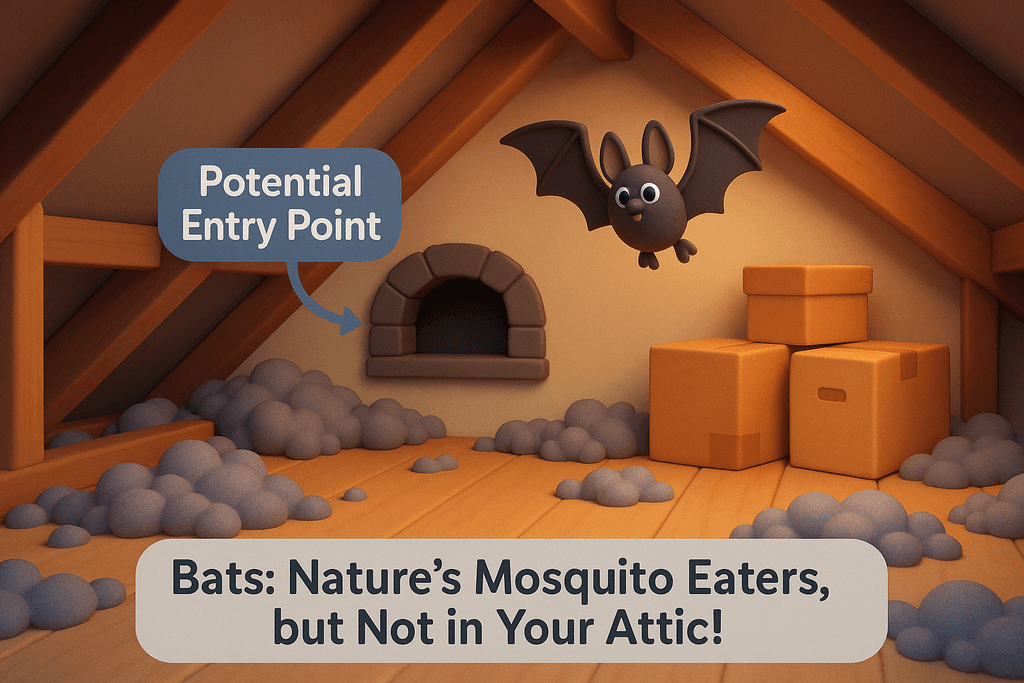
A single bat can eat up to 1,000 mosquitoes in just one hour, which sounds great until you realize they've decided your attic is the perfect place to call home. The Dallas-Fort Worth area is home to several bat species that love finding cozy spots in residential attics during certain times of the year. These flying mammals aren't trying to cause trouble, but when they move into your space, they bring some serious problems with them. Understanding why bats choose your attic and what risks they pose is the first step to dealing with an infestation safely.
background section
Common Bat Species in North Texas
North Texas is home to several bat species that commonly find their way into homes. The Mexican free-tailed bat is the most common visitor to attics in the Fort Worth and Denton areas. These small brown bats typically weigh less than half an ounce but can form colonies of hundreds or even thousands of individuals.
Other species you might encounter include:
- Evening bats that prefer quiet, undisturbed spaces like attics and wall voids
- Big brown bats that can squeeze through openings as small as half an inch
- Cave myotis bats that seek out dark, cave-like environments similar to attic spaces
- Pallid bats that occasionally roost in buildings during summer months
Did You Know? A colony of just 100 bats can produce over 3 gallons of guano (bat droppings) per week, creating serious health hazards in your attic.
When Bats Move Into Attics
Bats don't randomly choose attics throughout the year. They follow specific seasonal patterns that make certain times more likely for infestations. Spring and summer are peak seasons for bat activity in North Texas homes, especially from April through August when female bats form maternity colonies to raise their young.
This video shows what bat removal specialists look for when inspecting an attic for bat activity and the proper techniques for safe removal.
Your attic becomes attractive to bats for several reasons. The warm, dark environment mimics their natural roosting spots in caves and hollow trees. Small gaps around vents, chimneys, and roof edges provide easy entry points that bats can squeeze through.
Here's what makes your attic the perfect bat hotel:
- Temperatures that stay consistently warm during breeding season
- Protection from predators and harsh weather conditions
- Quiet spaces away from human activity during daytime hours
- Multiple exit points for nighttime feeding flights
Warning Signs of Bat Infestation
Most homeowners don't realize they have bats until the colony has been there for weeks or even months. Bats are sneaky and mostly active at dusk and dawn when you're less likely to notice them. But there are clear signs that indicate you're sharing your home with these winged visitors.
Watch for these common indicators:
- Scratching or squeaking sounds in your attic or walls, especially at night
- Dark brown or black stains near entry points from bat body oils
- Small dark droppings that look like mouse droppings but crumble into dust
- Strong ammonia smell from accumulated urine and guano
- Bats flying around your roofline at dusk or dawn
The droppings are particularly important to identify quickly. Unlike rodent droppings, bat guano contains insect parts that make it crumble easily when touched. However, you should never handle bat droppings without proper protection.
Health Alert: Up to 70% of bat guano samples test positive for Histoplasma capsulatum, the fungus that causes histoplasmosis, a serious respiratory disease.
Health Risks from Bat Guano
The biggest danger from bats in your attic isn't the bats themselves but what they leave behind. Bat guano and urine create serious health hazards that get worse the longer the infestation continues. Many homeowners in the Granbury and surrounding areas have discovered extensive contamination requiring professional cleanup and restoration services.
Histoplasmosis is the primary concern with bat droppings. This fungal infection grows in accumulated guano and becomes airborne when disturbed. Breathing in these spores can cause flu-like symptoms in healthy people and severe respiratory problems in those with weakened immune systems.
Additional health concerns include:
- Rabies exposure from direct contact with infected bats
- Parasites like bat bugs and mites that can spread throughout your home
- Allergic reactions to bat dander and droppings
- Bacterial infections from contaminated insulation and surfaces
Wildlife X Team provides comprehensive attic cleanup and restoration services that address these health risks properly. The process involves more than just removing the bats - it requires specialized equipment to safely remove contaminated insulation, disinfect all surfaces, and seal entry points to prevent future invasions. While some companies like Critter Control and Terminix offer similar services, the key is finding specialists who understand both humane removal and thorough decontamination protocols specific to bat infestations in Texas homes.
The Professional Bat Inspection Process
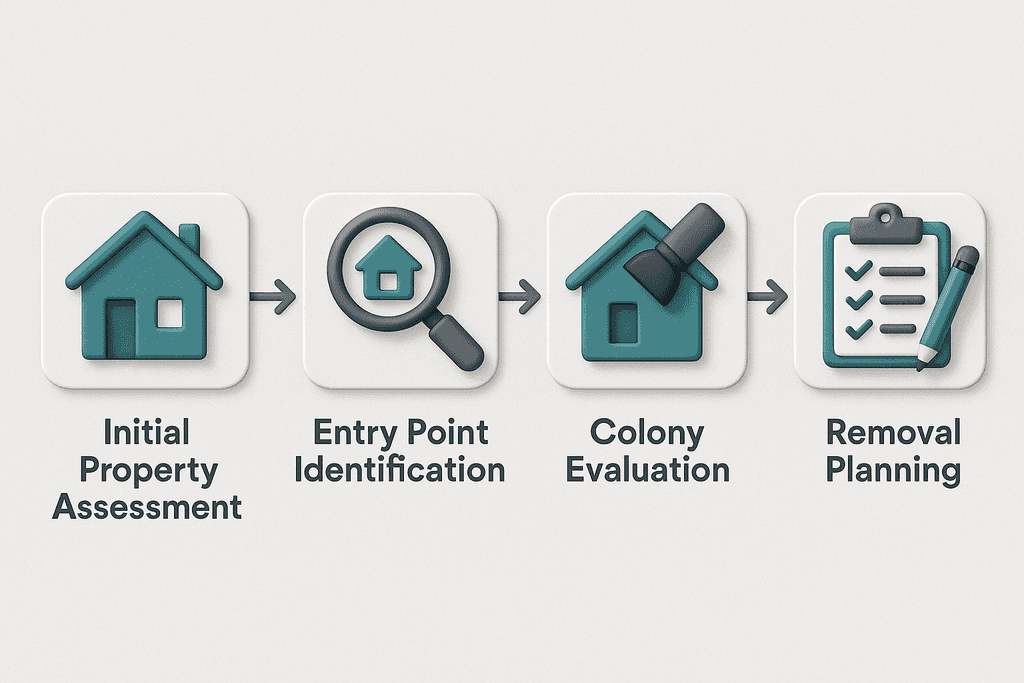
A single bat can squeeze through a gap the size of a dime, which means your attic probably has more entry points than you'd ever spot on your own. When specialists arrive to inspect your property, they're not just looking at the obvious holes. They're trained to find every crack, gap, and opening that bats might use to get inside. The Wildlife Inspection Report® that Wildlife X Team provides goes way beyond a quick look around. It's a detailed assessment that maps out every vulnerability in your home's structure, from the roofline down to the foundation.
The Professional Bat Inspection Process
Most homeowners are surprised to learn where bats actually get in. These aren't always the big obvious openings you'd expect.
Common bat entry points include:- Gaps where the roof meets the walls or chimney
- Loose or damaged soffit and fascia boards
- Broken or missing roof tiles and shingles
- Unscreened attic vents and gable vents
- Cracks in brick mortar and siding
- Gaps around utility lines entering the home
The inspection process also involves figuring out how many bats you're dealing with and what species they are. This matters more than you might think. Different bat species have different behaviors, and knowing the colony size helps determine the best removal strategy. Specialists look for telltale signs like guano piles, urine stains, grease marks where bats enter and exit, and the bats themselves if they're present during the inspection.
Timing is everything when it comes to bat removal. Between May and August, female bats give birth and raise their young. During this maternity season, removal work has to wait because baby bats can't fly yet. Sealing up your attic while flightless pups are inside would be inhumane and could leave you with dead bats in your walls. Professional inspectors factor this into their removal timeline.
Humane Bat Exclusion Methods That Work
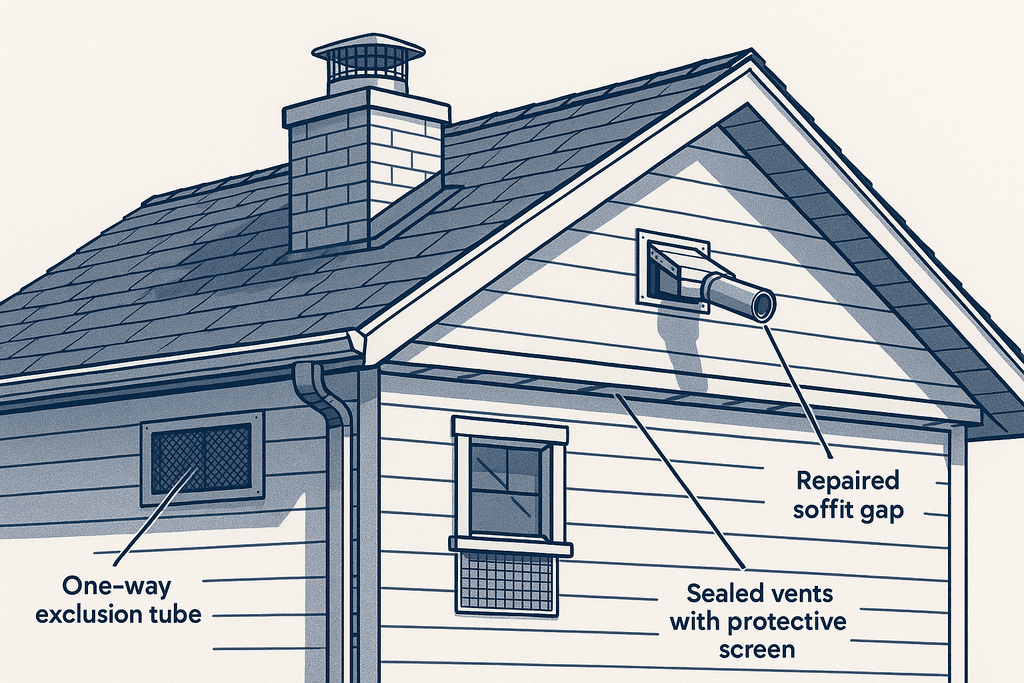
Forget everything you've seen in movies about catching bats with nets or trapping them in cages. Real bat removal doesn't work that way, and in Texas, it's actually illegal to trap or relocate bats. The method that actually works is called exclusion, and it's pretty clever when you think about it. Specialists install one-way devices at the entry points that let bats leave to hunt at night but prevent them from getting back in. The bats fly out on their own, realize they can't get back to their roost, and move on to find a new home elsewhere.
Humane Bat Exclusion Methods That Work
This video shows exactly how bat extruders work to safely remove bats from attics without harming them.
The exclusion approach beats other methods for several reasons. It's completely humane because bats leave voluntarily. It's legal and follows all Texas wildlife regulations. And it actually works better than trying to catch individual bats, which is nearly impossible when you're dealing with a colony of dozens or even hundreds of animals. Wildlife X Team uses this method because it's the most effective way to ensure complete removal without causing harm to the animals.
Why professional exclusion works better than DIY attempts:- Specialists find ALL entry points, not just the obvious ones
- Professional-grade exclusion devices are designed specifically for bats
- Experts know exactly when to install and remove devices
- They understand bat behavior and flight patterns
- Complete sealing prevents re-entry after exclusion
Here's the critical part that many people miss. After the bats are gone, every single entry point needs to be permanently sealed. Miss even one small gap and bats will find their way back in. Professional bat removal includes comprehensive sealing work using materials that bats can't chew through or squeeze past. This is where companies like Wildlife X Team separate themselves from DIY attempts that often fail because homeowners don't realize how many entry points exist.
Attic Cleanup and Restoration After Bat Removal
Getting the bats out is only half the job. What they leave behind can be a serious health hazard that needs professional attention. Bat guano and urine don't just smell bad. They can contain histoplasmosis spores, a fungus that causes respiratory illness in humans. When dried guano gets disturbed, these spores become airborne and can be inhaled. This isn't something you want to mess around with using a regular vacuum and dust mask from the hardware store.
Professional attic cleanup involves specialized equipment and safety protocols. Technicians wear protective gear including respirators while they remove contaminated insulation and guano deposits. The entire space gets disinfected and decontaminated using commercial-grade products that kill pathogens and neutralize odors. This level of cleaning goes way beyond what homeowners can safely do themselves.
Professional attic restoration includes:- Complete removal of contaminated insulation and materials
- Thorough disinfection of all surfaces and structural elements
- Treatment for odor elimination and air quality improvement
- Installation of new insulation to proper R-value specifications
- Final sealing of any remaining potential entry points
- Inspection to verify complete restoration
The insulation in your attic probably took a beating while bats were living there. Guano and urine compress and damage insulation, reducing its effectiveness and leaving your home less energy efficient. Wildlife X Team's attic cleanup service includes replacing damaged insulation so your attic functions properly again. This restoration work also helps eliminate the lingering odors that can persist long after the bats are gone.
The final step in the process is making sure bats can never get back in. Even after exclusion and sealing, specialists do a final inspection to verify that every potential entry point is properly secured. With Wildlife X Team's Renewable Lifetime Warranty, you get long-term protection and peace of mind. The combination of proper exclusion, thorough cleanup, and permanent sealing is what keeps your attic bat-free for good.
Why DIY Bat Removal Fails and Costs More
Most homeowners who try to remove bats themselves end up spending twice as much fixing their mistakes as they would have paid a professional in the first place. The problem starts when people seal up what looks like the main entry point without realizing bats use multiple access routes throughout your attic and walls. You might block one hole and feel accomplished, but the bats are still inside, and now they're trapped and looking for new ways out. This creates more damage and more entry points than you started with.
Common Mistakes That Make Things Worse
The biggest error people make is sealing bats inside their home. When you close up entry points without making sure all the bats have left, they'll chew through insulation, wiring, and wood to escape. Some will die in your walls, creating an awful smell that lasts for weeks.
- Sealing entry points during maternity season when baby bats can't fly yet
- Using the wrong materials that bats can easily chew through or squeeze past
- Missing secondary entry points that bats will expand into larger holes
- Attempting removal without proper protective equipment for guano exposure
Legal Problems You Didn't Know Existed
Texas has specific laws about when and how you can remove bats. Bat exclusion is illegal during maternity season from roughly May through August because separating mothers from flightless babies causes both to die. Many homeowners don't know this and face fines or have to redo the entire process during the legal season.
The Hidden Costs Nobody Talks About
DIY bat removal seems cheaper until you add up everything. You need one-way exclusion devices, sealants, protective gear, cleaning supplies, and replacement insulation. Then there's the cost of repairing damage from your first failed attempt.
- Professional-grade exclusion devices cost $50-150 per entry point
- Proper respirators and protective suits run $200-300
- Enzyme cleaners and disinfectants for guano removal add another $100-200
- Insulation replacement averages $1.50-3.00 per square foot
Health Risks of Bat Guano
Bat droppings carry histoplasmosis, a lung infection that can become serious or even deadly. The spores become airborne when you disturb the guano, and a simple dust mask from the hardware store won't protect you. Professional removal teams use respirators with HEPA filters and full protective suits because they understand the real danger.
DIY Versus Professional Bat Removal
DIY Approach
Cons:
- Risk of sealing bats inside your home
- No warranty if bats return
- Potential legal violations during maternity season
- Exposure to histoplasmosis without proper equipment
- Missing hidden entry points leads to recurring problems
- Average total cost after mistakes: $2,500-4,000
Pros:
- Lower initial equipment cost
- Work on your own schedule
Professional Approach
Pros:
- Complete inspection finds all entry points
- Legal compliance with Texas bat protection laws
- Safe guano removal with proper equipment
- Wildlife X Team's Renewable Lifetime Warranty protects your investment
- One-time complete solution prevents recurring costs
- Attic restoration included in comprehensive service
Cons:
- Higher upfront cost than DIY materials alone
- Need to schedule around company availability
What the Warranty Really Means
Wildlife X Team offers a Renewable Lifetime Warranty that covers future bat intrusions. This matters because bats are persistent and will test your home for new entry points every season. If you do it yourself and bats return six months later, you start over from scratch with your own money.
Real Customer Experiences
"We had a squirrel party in our attic. They came out to give an estimate and got to work on the spot. One entry point was obvious and I'd considered closing it up myself, but they found a couple of others I never would have. Great, quick work, and no squirrels, now months later!"
- Jesse Bernard
"Top notch service! They effectively removed the raccoons and secured my attic against future invasions."
- Mark Thompson
"The team was very responsive and took care of the squirrel issue in my attic quickly. Highly recommend!"
- David Lee
Jesse's experience shows exactly why professionals find problems homeowners miss. That "couple of others" he never would have found would have meant bats returning within weeks of his DIY repair. The months of protection he mentions is the real test of whether bat removal actually worked.
When Cheap Becomes Expensive
The math is simple once you factor in do-overs. A professional bat removal costs less than two failed DIY attempts, and you avoid the health risks and legal problems. Companies like Wildlife X Team include inspection, exclusion, cleanup, and warranty in one price, while DIY means buying each component separately and hoping you got it right.
- Professional service averages $1,500-2,500 for complete removal
- DIY first attempt costs $500-800 in materials and equipment
- DIY second attempt after failure adds another $400-600
- Professional cleanup after DIY contamination: $800-1,200
Some competitors like Terminix or local services offer bat removal, but few provide the comprehensive approach that includes detailed inspection reports and lifetime protection. The difference shows up months later when bats either stay gone or come back.
Getting Started with Professional Bat Removal
Dealing with bats in your attic isn't something you want to handle on your own. Between the health risks from guano and the legal protections many bat species have, professional removal is really the only safe option. The good news is that getting help doesn't have to be complicated or stressful.
The right approach involves more than just getting the bats out. A proper removal includes finding every entry point, safely excluding the bats, cleaning up the mess they left behind, and making sure they can't get back in. Wildlife X Team handles all of these steps with their comprehensive process, starting with a detailed Wildlife Inspection Report® that maps out exactly what's happening in your attic.
What sets professional services apart from DIY attempts is the prevention work. You might seal one obvious hole, but bats only need a gap the size of a quarter to squeeze through. Specialists know where to look and how to properly seal these entry points so you don't end up with the same problem next month.
If you're hearing scratching sounds at dusk or finding droppings in your attic, the sooner you act the better. Bat colonies grow quickly, and the damage they cause gets worse over time. Getting a professional inspection gives you a clear picture of what you're dealing with and what it'll take to fix it for good.
Still have questions about the bat removal process or what to expect during an inspection? The next section covers the most common concerns homeowners have when dealing with bat problems.
Common Questions About Bat Removal
Dealing with bats in your attic brings up a lot of questions, and most homeowners want straight answers before they make any decisions. The process can seem confusing at first, especially when you're trying to figure out costs, timing, and whether those bats are actually dangerous. We've put together the most common questions people ask when they discover they're sharing their home with these flying mammals. These answers will help you understand what to expect and how to move forward safely.
How long does bat removal take?
Most bat removal projects take between one to three weeks to complete, though the timeline depends on the size of your colony and how many entry points need sealing. The actual exclusion process happens over several days because bats need to leave naturally through one-way devices. Wildlife X Team starts with a thorough inspection, installs exclusion devices, and then returns to seal everything up once all the bats have left.
When is the best time to remove bats from an attic?
The best time for bat removal is during spring or fall when bats aren't raising their young. From May through August, baby bats can't fly yet, so removal during this period is illegal in most areas and would trap flightless pups inside your attic. Professional removal companies follow strict seasonal guidelines to ensure humane treatment and legal compliance.
Are bats dangerous to have in your home?
Bats themselves rarely attack people, but they carry diseases like rabies and their droppings create serious health hazards. Bat guano contains fungal spores that cause histoplasmosis, a respiratory disease that can be severe in some cases. The urine and feces also damage insulation, create terrible odors, and attract other pests into your home.
How much does professional bat removal cost?
Professional bat removal typically costs between $300 and $1,500 depending on the colony size and how much damage needs repair. This price usually includes inspection, exclusion, sealing entry points, and sometimes attic cleanup. While some companies like Terminix offer basic removal, Wildlife X Team provides comprehensive services that include their Wildlife Inspection Report and a renewable lifetime warranty for long-term protection.
Can bats return after removal?
Bats can return if all entry points aren't properly sealed, which is why professional exclusion matters so much. They remember roosting sites and will try to get back in through any gap larger than a quarter inch. Proper animal proofing with quality materials and expert sealing prevents future invasions.
What happens if you ignore a bat infestation?
Ignoring bats leads to growing colonies, extensive property damage, and increasing health risks for everyone in your home. The guano piles up quickly, soaking through insulation and ceilings, while the smell gets worse every day. The longer you wait, the more expensive the cleanup and repairs become, not to mention the disease exposure that puts your family at risk.