
Preventing Wildlife Infestations: Essential Tips for Texas Property Owners

A single raccoon family can tear through your attic insulation and wiring in less than two weeks, racking up repair bills that often exceed several thousand dollars. Texas homeowners face some of the highest wildlife intrusion rates in the country thanks to our mild winters and rapidly expanding suburbs that push into natural habitats. Understanding why your property attracts unwanted visitors is the first step to keeping them out for good, and companies like Wildlife X Team specialize in identifying these vulnerabilities before they become expensive problems.
Table of Contents
Understanding Wildlife Behavior in North Texas
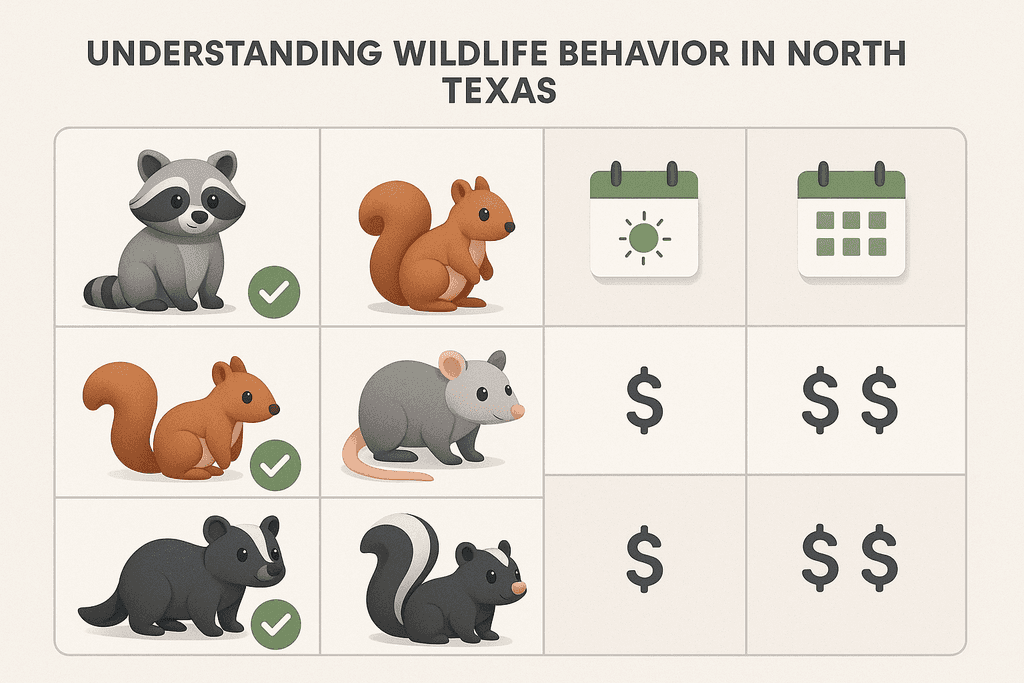
Texas homeowners deal with more wildlife intrusions than almost any other state, and the Dallas-Fort Worth area sees some of the highest activity levels. The mix of urban sprawl and natural habitats creates the perfect storm for animals looking for food and shelter. When wild animals move into your attic or crawl space, they don't just make noise. They can cause thousands of dollars in damage and create serious health risks for your family.
background section
Common Wildlife Intruders in the DFW Area
The Fort Worth, Denton, and Granbury regions have their own unique mix of wildlife problems. Some animals show up more often than others, and knowing which ones to watch for can help you spot trouble early.
Here are the most frequent uninvited guests in North Texas homes:
- Raccoons - These masked bandits are smart and strong enough to tear through roof vents and soffits
- Squirrels - They chew through wood, wires, and insulation to build nests in attics
- Opossums - Often found in crawl spaces and under decks looking for dark hiding spots
- Rats and mice - Small enough to squeeze through tiny gaps and multiply quickly
- Bats - Colonies can take over attics and leave behind dangerous droppings
When Wildlife Problems Peak in Texas
Wildlife activity follows predictable patterns throughout the year. Understanding these seasonal changes helps you know when to be extra careful about protecting your property. Spring and fall are the busiest times for wildlife intrusions in Texas homes.
Different animals become active at different times:
- Spring (March-May) - Raccoons and squirrels search for nesting sites to raise babies
- Summer (June-August) - Bats seek cool attic spaces and rats look for water sources
- Fall (September-November) - Most animals prepare for winter by finding warm shelter
- Winter (December-February) - Opossums and rodents move indoors to escape cold weather
Why Some Homes Attract More Wildlife
Not every house has the same risk level for wildlife problems. Certain features make properties more appealing to animals looking for food and shelter. Homes near wooded areas or with older construction tend to have more issues, but even newer houses can attract unwanted visitors.
Properties with these features face higher risks:
- Unsealed gaps around pipes, vents, or utility lines
- Damaged roof shingles or loose soffits that create entry points
- Trees with branches touching or hanging over the roof
- Pet food left outside or unsecured garbage bins
- Standing water sources like birdbaths or clogged gutters
The Real Cost of Wildlife Damage
Wildlife damage goes way beyond annoying scratching sounds at night. The financial impact can be serious, and many homeowners don't realize how expensive repairs can get until it's too late. Insurance companies often don't cover wildlife damage, leaving property owners to pay out of pocket.
Here's what different animals typically cost Texas homeowners in repairs and cleanup:
| Animal Type | Peak Season | Common Damage | Average Repair Cost |
|---|---|---|---|
| Raccoons | Spring & Fall | Torn insulation, damaged ductwork, contaminated attics | $2,000 - $5,000 |
| Squirrels | Spring & Summer | Chewed wires, gnawed wood, destroyed insulation | $1,500 - $4,000 |
| Bats | Summer | Guano buildup, contaminated insulation, health hazards | $3,000 - $8,000 |
| Rats/Mice | Fall & Winter | Chewed wires, contaminated food areas, droppings | $800 - $2,500 |
| Opossums | Winter | Damaged vents, soiled crawl spaces, odor problems | $1,000 - $3,000 |
The costs add up fast when you factor in removal, cleanup, and prevention work. A single raccoon family can destroy thousands of dollars worth of insulation in just a few weeks. Squirrels chewing through electrical wires create fire hazards that put your entire home at risk. Wildlife X Team offers comprehensive solutions that handle removal, cleanup, and prevention to protect your property long-term.
Beyond the money, wildlife intrusions bring health concerns too. Animal droppings carry diseases like histoplasmosis and salmonella. Parasites like fleas and ticks often come along with the animals. The longer wildlife stays in your home, the bigger these risks become for your family and pets.
Securing Your Property's Vulnerable Entry Points
A single gap the size of a quarter is all it takes for a determined raccoon to tear its way into your attic. Texas homes have dozens of these weak spots that most homeowners never notice until they hear scratching sounds at 2 AM. The truth is, wildlife doesn't break in through locked doors. They find the spots we forget exist, and once they're inside, getting them out becomes a much bigger headache than prevention ever would have been.

Securing Your Property's Vulnerable Entry Points
Roof vents and soffits are like welcome mats for squirrels and raccoons. These areas often have small gaps where the materials don't quite meet, and animals can smell the warm air escaping from your home. Fascia boards deteriorate over time, especially in Texas heat, creating perfect entry points that blend right into your roofline where you'd never think to look.
- Check all roof vents for loose screens or damaged covers
- Inspect soffits for gaps, holes, or rotted wood sections
- Examine fascia boards for warping or separation from the roof
- Look for foundation cracks wider than a pencil
- Survey crawl space vents for missing or damaged screens
- Assess chimney caps for proper installation and damage
Foundation gaps might seem too small to matter, but mice can squeeze through openings the size of a dime. Crawl space vulnerabilities are even worse because they're dark, protected, and rarely checked. Animals love these spots because they offer direct access to your home's interior walls and insulation.
Chimney protection is especially important in Texas homes where many chimneys go unused for months at a time. Without a proper cap, your chimney becomes a highway for raccoons, birds, and squirrels looking for a safe nesting spot. Window wells and attic vents need reinforcement too, particularly the plastic vents that crack under our intense summer sun.
The Wildlife Inspection Report® that Wildlife X Team provides identifies entry points most people would never find on their own. During inspections, technicians often discover five or six vulnerable spots when homeowners expected maybe one or two. That's the difference between a quick fix and actual protection.
Year-Round Maintenance That Keeps Wildlife Away
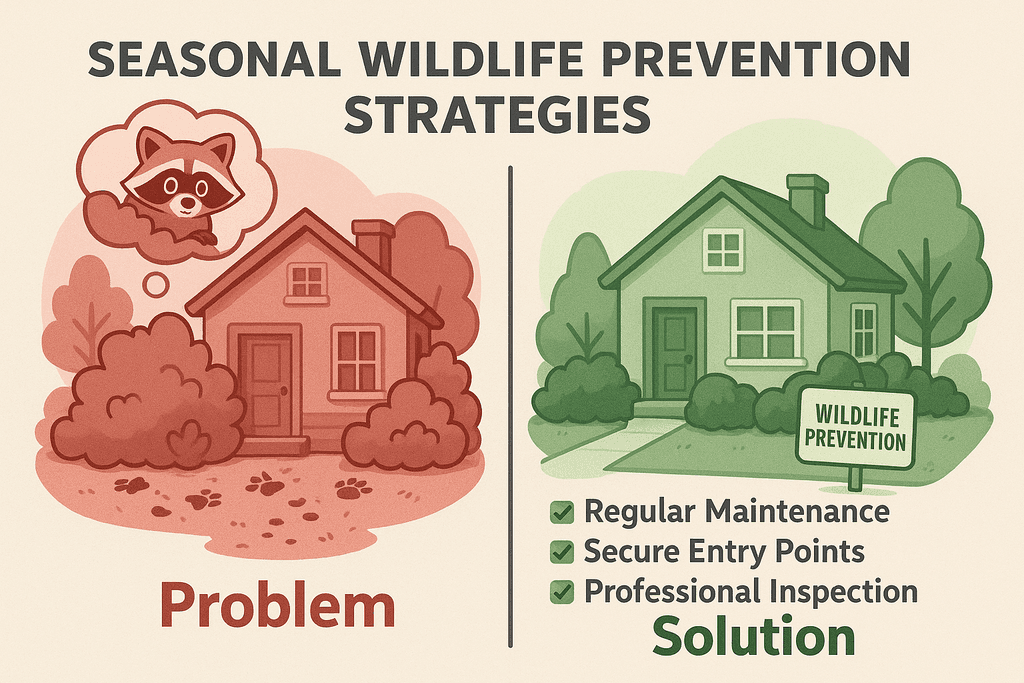
Wildlife doesn't take vacations, and neither should your prevention efforts. Each season brings different challenges that can either protect your home or turn it into prime real estate for unwanted guests. The homes that stay wildlife-free aren't just lucky. They follow a maintenance rhythm that makes the property less appealing and harder to access throughout the entire year.
Year-Round Maintenance That Keeps Wildlife Away
Spring and summer yard maintenance does more than keep your lawn looking nice. Overgrown bushes against your house create hidden pathways for animals to explore your foundation without being seen. Tall grass near structures gives rodents cover to move around freely, and they'll use that advantage to find every crack and gap you have.
Fall preparation matters because it happens right before peak nesting season. Animals are actively searching for warm winter homes starting in September, and they're not picky about moving into spaces that already have small damage. Temperature changes in winter create new gaps as materials expand and contract, which is why winter checks catch problems that weren't there in October.
- Trim tree branches to at least 6-8 feet away from your roof
- Clear debris from gutters that animals use as nesting material
- Store firewood at least 20 feet from your home's exterior
- Keep trash bins sealed and away from entry points
- Remove fallen fruit from trees near the house
- Secure outdoor pet food in airtight containers
Tree trimming and vegetation management around structures eliminates the bridges animals use to reach your roof. A squirrel can jump about four feet horizontally, so those branches you think are far enough probably aren't. Proper waste management and outdoor storage practices remove the food sources that attract wildlife to your property in the first place.
Professional exclusion services provide long-term protection because they address problems you can't see yet. The materials used in professional installations last years longer than hardware store solutions, and the techniques ensure animals can't just rip through repairs the way they do with DIY attempts.
Professional Prevention vs DIY Approaches
Most homeowners try the DIY route first, and there's nothing wrong with wanting to save money. The problem shows up three months later when the scratching sounds come back and you realize the chicken wire you installed didn't stop anything. DIY solutions fail because wildlife is smarter and more persistent than people expect, and the materials available at regular stores just aren't designed for determined animals with sharp teeth and claws.
Hidden entry points are where DIY efforts fall apart completely. You might seal the obvious hole in your soffit, but miss the gap behind your gutter downspout or the separated flashing around your chimney. Animals find these spots because they're actively looking for them, running their paws along every seam and joint until something gives.
Professional-grade materials make a real difference. The metal flashing, heavy-gauge screening, and commercial sealants used in professional installations can't be chewed through like the thin aluminum mesh from hardware stores. Installation techniques matter just as much because improperly secured barriers create new gaps as they settle.
Customer Experience: Jesse Bernard had squirrels throwing a party in his attic and called for an estimate. The team found multiple entry points he never would have discovered on his own and handled everything on the spot. Months later, still no squirrels. That's what happens when professionals catch all the vulnerabilities instead of just the obvious ones.
The Wildlife Inspection Report® gives you a complete picture of your property's vulnerabilities before any work begins. You're not guessing which spots need attention or hoping you found everything. The inspection maps out every risk area so nothing gets missed.
Renewable lifetime warranties protect your investment in ways DIY never can. If an animal finds a way in through a professionally sealed area, the repair is covered. When you do it yourself and something fails, you're starting over from scratch with your own time and money. Real customer experiences show the difference pretty clearly. People who went professional first saved themselves the frustration of failed DIY attempts and repeat infestations.
Taking Action Before Wildlife Moves In
Here's the thing about wildlife problems in Texas homes. By the time you hear scratching in your attic or see droppings in your crawl space, animals have already found their way inside and started making themselves comfortable. The damage is happening right now, and waiting just makes everything worse and more expensive to fix.
Prevention really is the smarter move. Getting a professional inspection before you have a wildlife emergency means you can seal up entry points and fix vulnerabilities while they're still small problems. It's a lot cheaper to install vent guards and seal a few gaps than to remove animals, clean up contamination, replace insulation, and repair all the damage they caused.
Most homeowners miss the obvious entry points that wildlife use. A small gap under your roofline or a loose vent cover doesn't look like much to you, but raccoons and squirrels see it as an open door. Wildlife X Team's inspection process finds these hidden vulnerabilities before animals do, which is why their approach includes both removal and long-term prevention with barriers and exclusion work.
The best time to deal with wildlife issues is before they start. Once animals move in and have babies in your attic, removal gets complicated and the mess they leave behind creates health risks for your family. Taking action now means you avoid those late-night emergencies when you realize something is living in your walls.
If you're wondering whether your Texas home might be at risk or what specific steps you should take, the questions below cover the most common concerns property owners have about wildlife prevention.
Common Questions About Wildlife Prevention
Texas homeowners deal with wildlife problems year-round, and most have similar questions when it comes to protecting their property. Understanding the basics of wildlife prevention can save you thousands of dollars and countless headaches down the road. Here are the most common questions we hear from property owners across the Dallas-Fort Worth area.
When is the best time to wildlife-proof your property?
Fall is actually the ideal time to secure your home before animals start looking for warm winter shelter. That said, wildlife prevention works any time of year, and the best time is always right now if you're already hearing scratching sounds in your attic. Waiting until you have an active infestation costs significantly more than proactive prevention since you'll pay for both removal and exclusion work.
How much does professional prevention cost compared to removal?
Prevention services typically cost 40-60% less than dealing with a full-blown infestation. When animals move in, you're paying for trapping, removal, cleanup, contamination treatment, and then exclusion work anyway. Wildlife X Team's Wildlife Inspection Report® identifies vulnerabilities before they become expensive problems, and their renewable lifetime warranty means you won't pay twice for the same issue.
What makes Texas properties especially vulnerable to wildlife?
Texas homes face unique challenges that many northern properties don't deal with. Our mild winters mean animals stay active year-round instead of hibernating, and rapid urban expansion pushes wildlife into neighborhoods constantly. The combination of older homes with foundation settling and newer construction with builder shortcuts creates plenty of entry points that raccoons and squirrels exploit within days of discovering them.
How long does professional exclusion work last?
Quality exclusion work should last decades when done correctly with proper materials. The key difference between DIY attempts and professional service is knowing which materials animals can chew through and which entry points most homeowners miss completely. Companies like Wildlife X Team use commercial-grade barriers and offer warranties because they know their work holds up against determined wildlife.
Can wildlife return after professional prevention services?
Animals can't return through properly sealed entry points, but they might find new vulnerabilities if your entire property wasn't addressed. This is why comprehensive inspections matter more than quick fixes. A thorough prevention plan covers foundation vents, roof lines, chimney caps, and even spots where different building materials meet since these junction points often develop gaps over time.
What is included in a Wildlife Inspection Report?
A proper wildlife inspection examines every potential entry point on your property, from ground level to roofline. The report documents current vulnerabilities, signs of animal activity, and prioritizes repairs based on risk level. You'll get photos of problem areas, detailed recommendations, and a clear action plan that prevents the most common intrusion points that Texas homeowners face throughout the year.